
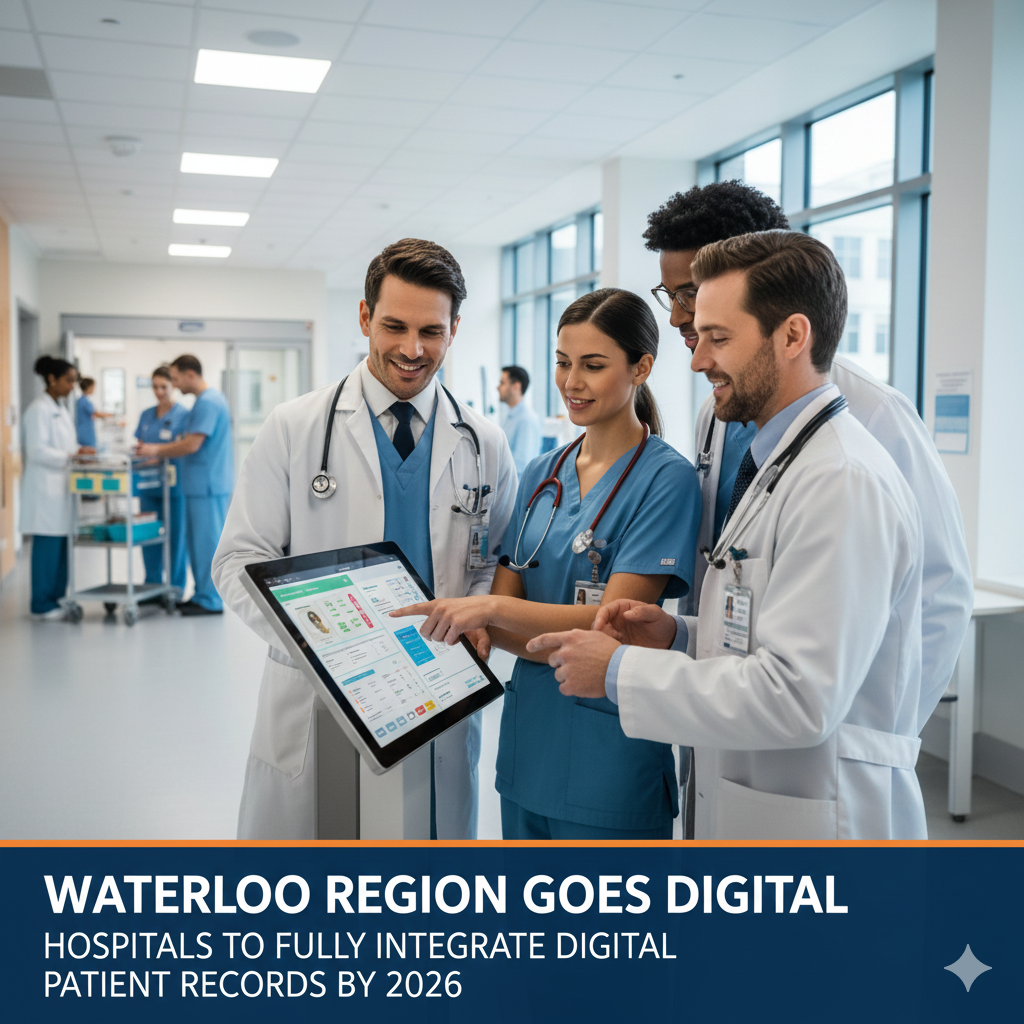
Paper charts, fax machines, and time-consuming phone calls are on their way out across Waterloo Region’s hospital system. By 2026, patients and healthcare providers can expect a fully integrated digital care experience as local hospitals move to a shared electronic medical records platform designed to streamline treatment, improve communication, and enhance overall patient care.
The Waterloo Regional Health Network (WRHN) and Cambridge Memorial Hospital (CMH) have confirmed plans to synchronize their digital systems, marking a major milestone in the region’s healthcare modernization efforts.
A Major Shift Toward Fully Digital Healthcare
Healthcare leaders say the transition will fundamentally change how hospitals across Waterloo Region communicate, share information, and coordinate patient care.
Goodbye to Paper, Hello to Digital
CMH President and Chief Executive Officer Patrick Gaskin announced that Cambridge Memorial Hospital has officially purchased the same electronic medical record (EMR) system currently used by the Waterloo Regional Health Network. Once implemented, the shared platform will allow all hospitals in the region to operate within a single, connected digital environment.
“Goodbye to paper charts and faxes, hello to ‘click, click, click,’” Gaskin said, describing the transformation in simple terms.
Under the new system, patient records, test orders, and clinical notes will be shared electronically in real time, eliminating many of the inefficiencies that currently exist when patients move between hospitals.
How Patient Care Works Today — And Why It’s Changing
While hospitals in Waterloo Region already collaborate closely, much of that coordination still relies on outdated methods.
Current System Relies on Phone Calls and Fax Machines
Gaskin explained that transferring patient information between hospitals often involves a combination of phone calls, printed records, handwritten charts, and faxed documents. In some cases, physical records even travel with patients as they move between facilities.
“In the past it’s a phone call, a fax machine, a paper chart, a record that’s sent out with a patient,” he said.
Although these processes have worked for decades, they are time-consuming, prone to delays, and increase the risk of information gaps or duplication.
A Seamless Digital Future
Once the new system is live, clinicians will be able to order tests, view results, and access patient histories electronically across all participating hospitals.
“In the future it’s a ‘click, click, click,’ and you’ll order the test,” Gaskin said, emphasizing how quickly and efficiently care decisions will be made.
This digital approach is expected to significantly reduce wait times, improve coordination between care teams, and ensure that healthcare providers always have access to the most up-to-date patient information.
What the New System Will Enable
Hospital leaders say the benefits of a shared digital platform go far beyond convenience.
Real-Time Access to Patient Information
With a unified electronic medical record system, clinicians at any participating hospital will be able to instantly view a patient’s medical history, test results, imaging, and treatment plans — provided appropriate privacy and security protocols are met.
This is especially critical for patients who receive care at multiple hospitals or who are transferred between facilities for specialized treatment.
Faster Tests and More Efficient Care
By ordering tests and procedures electronically, hospitals can reduce delays caused by manual paperwork and communication breakdowns. Results can be shared instantly, allowing doctors to make faster, more informed decisions.
Gaskin said this will help “optimize clinical care across all the hospital sites,” ensuring patients receive the right care at the right time, regardless of where they are treated.
A Region-Wide Approach to Modern Healthcare
The digital integration effort reflects a broader strategy to strengthen healthcare delivery across Waterloo Region.
Collaboration Between WRHN and CMH
The Waterloo Regional Health Network, which includes major hospital sites in the region, has already been using the electronic system that CMH is now adopting. Aligning the platforms ensures compatibility and consistency across organizations.
Both Gaskin and WRHN President and CEO Ron Gagnon emphasized the importance of working together to build a more connected healthcare system.
The two leaders discussed the initiative publicly during an All Councils meeting in Elmira on Friday, highlighting the project as a key step toward modern, patient-centered care.
Timeline: When Patients Will See the Changes
While the benefits are significant, hospital officials stress that implementing a region-wide digital system is a complex process that takes time.
Project Launched in November
Cambridge Memorial Hospital officially launched the project in November 2025. According to Gaskin, the installation and rollout of the new computer system will take approximately 12 months.
This timeline includes system setup, data migration, staff training, and extensive testing to ensure reliability and patient safety.
Full Digital Integration Expected in 2026
If the project stays on schedule, 2026 will mark the beginning of fully digital patient care across all participating hospitals in Waterloo Region.
Hospital leaders say careful planning is essential to avoid disruptions and ensure staff are comfortable using the new technology before it goes live.
Supporting Growth and Future Demand
The move to digital records is also part of long-term planning to support population growth and increasing demand for healthcare services.
Planning for the Next Decade
Cambridge Memorial Hospital has previously outlined plans to prepare for the next 10 years of growth in the community. A modern digital infrastructure is seen as a critical foundation for expanding services, managing higher patient volumes, and improving efficiency.
As Waterloo Region continues to grow, healthcare providers expect more patients to require complex, coordinated care across multiple facilities.
Reducing System Strain
By streamlining administrative processes and improving communication, the new system could help reduce strain on healthcare workers, allowing them to focus more time and energy on direct patient care.
Hospital officials believe this will be especially important as staffing pressures and system demands continue to challenge healthcare organizations across Ontario.
Staff Training and Change Management
Transitioning from paper-based systems to a fully digital environment requires significant preparation.
Ensuring a Smooth Transition
Hospital leadership says staff training will be a major focus throughout the implementation period. Clinicians, administrators, and support staff will all need to learn how to use the new system effectively and confidently.
While change can be challenging, Gaskin described the mood around the project as optimistic and forward-looking.
“It’s a super exciting time for us,” he said.
Privacy, Security, and Patient Confidence
With increased digital connectivity comes heightened attention to data privacy and cybersecurity.
Protecting Patient Information
Hospital officials stress that the new system will meet strict provincial and federal standards for patient privacy and data security. Access controls, encryption, and audit trails will be in place to ensure sensitive information is protected.
Patients will continue to have control over their personal health information, and hospitals say safeguarding trust remains a top priority.
Conclusion: A Transformational Moment for Regional Healthcare
The decision by Cambridge Memorial Hospital and the Waterloo Regional Health Network to synchronize digital patient records marks a significant step forward for healthcare in Waterloo Region.
By eliminating paper charts, fax machines, and fragmented communication, the new system promises faster, safer, and more coordinated care for patients — all powered by a few simple clicks.
As the project moves toward full implementation in 2026, hospital leaders say the focus will remain on collaboration, careful planning, and patient-centered outcomes. For residents across the region, the shift represents not just a technological upgrade, but a transformation in how healthcare is delivered now and into the future.


Leave a Reply