
Region of Waterloo Approves New Emergency Communications Hub After Intense Budget Debate
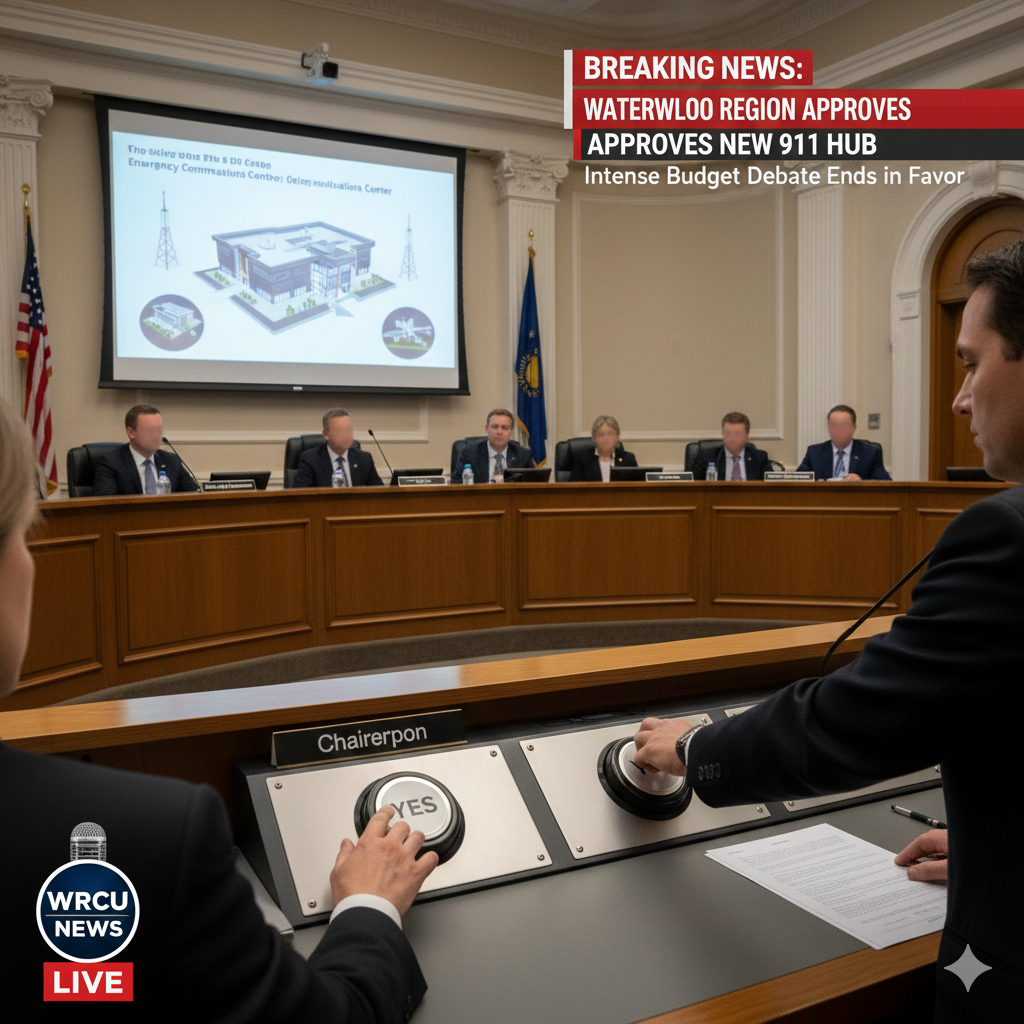
The approval of the Region of Waterloo’s 2026 budget has cleared the way for a long-planned emergency services communications hub, ending months of debate and a dramatic final vote that highlighted deep concerns over cost, oversight, and public accountability. While the budget ultimately passed, the process exposed sharp divisions among regional leaders over the police service’s $176 million capital request — a figure that has drawn heightened scrutiny in the days since the vote.
With the budget now finalized, the new communications hub will move forward, marking a significant investment in the region’s emergency response infrastructure and reviving a project that has been under discussion for more than a decade.
Budget Approval Brings Scrutiny to Police Capital Spending
Although the Region of Waterloo’s overall 2026 budget has been approved, attention has quickly turned to individual spending items, particularly the substantial capital allocation requested by the Waterloo Regional Police Service (WRPS).
At the centre of the debate is a $176 million capital budget line intended to fund the construction of a new emergency services communications hub. The facility is designed to centralize police emergency communications and improve coordination with other first responders during large-scale emergencies or system failures.
As details of the budget became public, questions emerged from councillors and residents alike about the scale of the investment, its necessity, and whether alternatives could reduce the overall cost without compromising safety.
A Contentious Committee Debate
The communications hub became one of the most hotly debated items during the region’s budget committee deliberations. Kitchener Mayor Berry Vrbanovic introduced a motion aimed at slowing the process and reassessing the cost.
Motion to Revisit the Price Tag
Vrbanovic’s motion proposed sending the police service’s capital spending plan back to the Police Services Board with instructions to explore ways to reduce the project’s price tag. Supporters argued that, given the size of the investment, further cost containment efforts were warranted before granting approval.
However, the motion failed to gain enough support. Following its defeat, the budget committee voted to approve the capital portion of the police budget, including funding for the communications hub.
Council Vote Reignites the Debate
While the committee approval appeared to settle the matter, the issue resurfaced during the full regional council meeting when councillors considered the broader 2026 budget.
Despite earlier approval at committee, the capital portion related to the communications hub was unexpectedly voted down during council deliberations. The decision triggered confusion and prompted a recess, underscoring the tension and uncertainty surrounding the project.
A Dramatic Reversal After Recess
Following the recess, council proceedings took an unexpected turn when North Dumfries Mayor Sue Foxton asked to change her original vote. She sought to reverse her earlier opposition and vote in favour of the capital budget.
The request sparked immediate discussion and procedural scrutiny but was ultimately allowed. With the revised vote tallied, the full 2026 regional budget passed — including the funding required to proceed with the communications hub.
The outcome ensured the project would move forward, but the dramatic sequence of events left lingering questions about how close the region came to delaying or reshaping one of its largest capital investments.
Police Services Board Defends the Project
In the aftermath of the vote, Police Services Board Chair Ian McLean addressed public concerns during an appearance on The Mike Farwell Show, offering a detailed defence of the board’s decision-making process.
McLean emphasized that the $176 million estimate was not arbitrary and reflected extensive analysis and consultation.
“The budget estimate that we put forward to the Region stands on its own merit,” he said. “It stands on the basis of comprehensive consultation and hard work by the staff, and also the due diligence of the board itself. As we always do, we put police through their paces on the request they are making.”
“Not a Taj Mahal”
Responding directly to criticism that the facility may be excessive, McLean rejected the notion that the project represented unnecessary extravagance.
“The board has done its due diligence very thoroughly,” he said. “Any suggestion to the contrary is a crock. This is not a Taj Mahal. It is the building required by our community.”
McLean noted that the facility is designed to meet strict national standards set by the National Emergency Management Agency (NEMA) for this type of critical infrastructure.
“It meets the specifications this type of building demands and should be present,” he added.
Purpose of the Emergency Communications Hub
According to police leadership, the communications hub is intended to serve as a resilient, centralized command and communications centre capable of operating during worst-case scenarios.
Ensuring Continuity During Disasters
McLean said the guiding principle behind the project is reliability during emergencies, particularly when other systems may fail.
“The intention is that should disaster strike and nothing else is working, police will answer the phone and will be able to coordinate with other emergency services,” he said.
The facility is expected to support police, fire, and paramedic coordination, ensuring that emergency calls are received and managed even during major power outages, cyber incidents, or natural disasters.
Roots of the Project Go Back More Than a Decade
While the price tag has raised eyebrows, police officials stress that the idea of a new communications hub is far from new.
A Tragedy That Exposed Gaps
Discussions about the need for a modernized emergency communications facility began as early as 2012, following a fatal helicopter crash at the Waterloo Region Airport. The incident exposed shortcomings in inter-service communication, particularly during complex emergency responses involving multiple agencies.
That event prompted a series of reviews and reports highlighting the risks associated with fragmented or outdated communication systems.
Years of Reports and Review
McLean said the Police Services Board has revisited the issue repeatedly over the years.
“We have been talking about the need for this facility for 13 years,” he said. “Several reports — and I know our board, which I’ve been on for five years — we have reviewed this, asked questions about this repeatedly, over multiple meetings.”
He added that board members have consistently challenged assumptions and explored alternatives.
“We’ve asked the tough questions. We’ve asked about the options,” McLean said. “You can be assured we’ve done the due diligence of saying: What is the right thing, not only for the police, but for the community itself?”
Broader Budget Context
The communications hub debate unfolded against the backdrop of a broader regional budget that includes property tax increases for homeowners across Waterloo Region. On average, residents are expected to pay approximately $142 more in 2026, adding to public sensitivity around large capital expenditures.
Related municipal budgets, including those for the cities of Waterloo and Kitchener, have also faced scrutiny as councils attempt to balance infrastructure needs with affordability concerns.
Looking Ahead
With the 2026 budget approved, planning for the emergency communications hub is expected to proceed, though officials anticipate continued public interest and oversight as the project moves into design and construction phases.
Supporters argue the facility represents a critical investment in public safety and resilience, while critics remain concerned about cost escalation and long-term financial impact.
What is clear is that the debate surrounding the communications hub has underscored broader questions about transparency, trust, and how municipalities justify major infrastructure spending in an era of rising costs. As construction plans advance, the project is likely to remain under close watch — both inside council chambers and among the residents it is intended to protect.
You may also like



Leave a Reply