
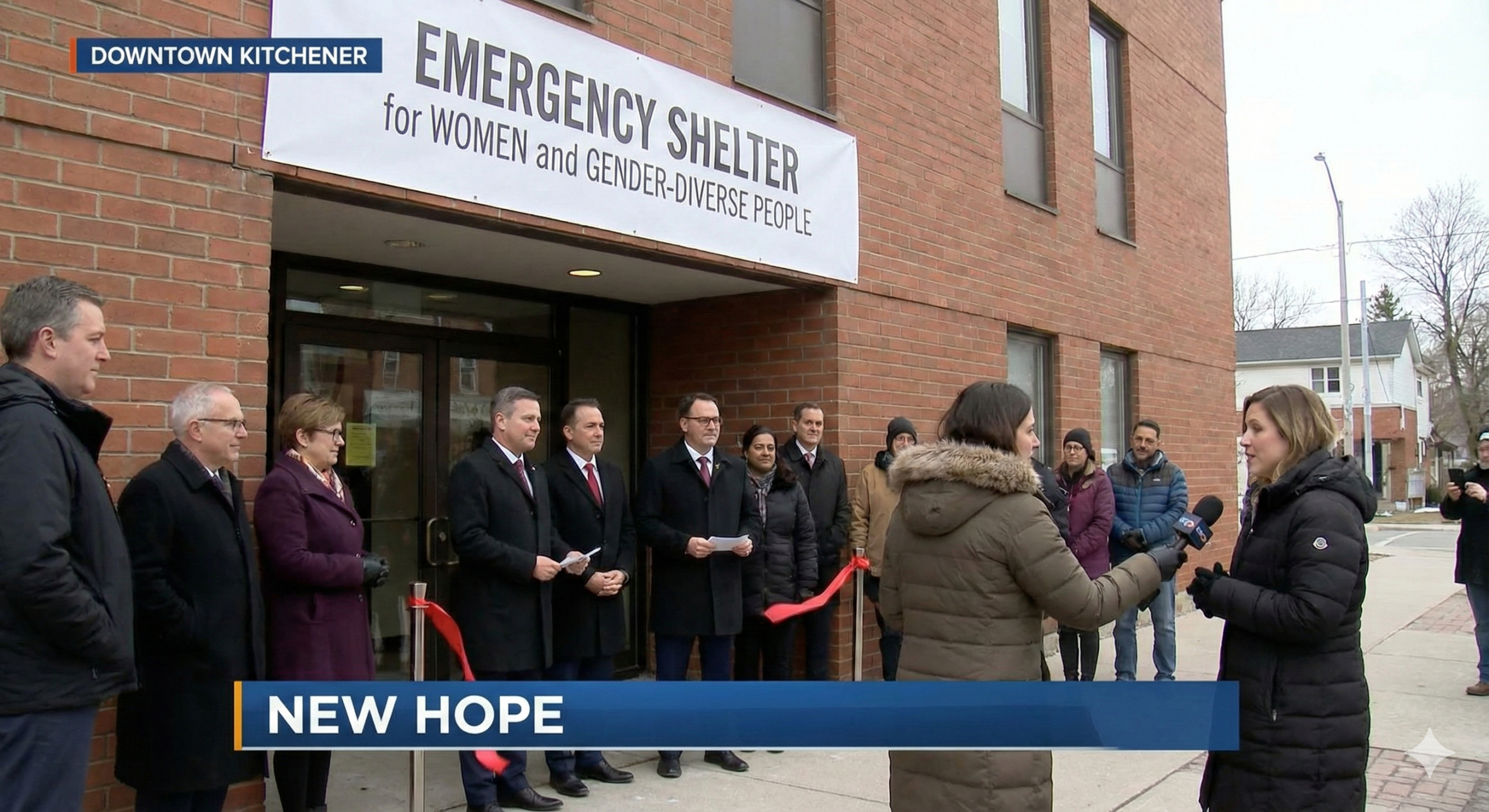
A newly renovated emergency shelter in downtown Kitchener is set to provide critical support and protection for women and gender-diverse individuals who are experiencing homelessness or living in unsafe conditions. Located at 84 Frederick Street, the facility has officially opened its doors after months of construction and preparation, bringing much-needed relief to a region grappling with increasing housing insecurity.
The upgraded shelter now includes 66 safe and fully renovated spaces designed to house individuals who might otherwise be sleeping on the streets, staying in unsafe environments, or cycling through overcrowded crisis shelters. More than just a place to stay the night, the centre is being positioned as a comprehensive pathway toward stability and long-term housing.
A Timely Response to Growing Demand in Waterloo Region
The Waterloo Region has been under increasing pressure due to rising housing costs, limited affordable housing options, and a growing number of individuals experiencing homelessness. In response to this demand, the regional government purchased the Frederick Street building last summer and moved quickly to transform it into an emergency shelter.
By December, the facility was deemed essential by Services and Housing in the Province (SHIP) to operate as an emergency shelter, due to the increasing number of individuals seeking assistance. Renovations continued during this time, with construction teams expanding the building’s capacity by adding 44 new housing spaces in addition to upgrading existing infrastructure.
With renovations now complete, the shelter is functional, equipped, and ready to serve those most in need. Officials hope that the reopening of 84 Frederick Street will help alleviate pressure on surrounding shelters and provide more consistent support for vulnerable populations.
A Safe Haven Built on Dignity and Stability
Thomas DiCarlo, the Acting CEO of Services and Housing in the Province, stressed the importance of having a transitional housing space specifically designed for women and gender-diverse individuals.
“This facility will offer safety, dignity, and a bridge to permanent, sustainable housing for women and gender-diverse individuals,” DiCarlo said at the opening. “Without transitional housing and programs like Frederick Street, many women would be forced into impossible choices — returning to unsafe situations, remaining in temporary crisis shelters indefinitely, or becoming part of the hidden homeless population.”
The shelter aims not only to provide a physical roof over people’s heads but also to restore a sense of stability and dignity. Residents will have access to a secure and supportive environment where privacy and respect are at the forefront of the shelter’s mission.
More Than a Shelter: Comprehensive Wrap-Around Support Programs
What truly sets the Frederick Street facility apart is the range of wrap-around services available onsite. These programs are intended to address not only the immediate housing crisis but also the deeper challenges that many individuals facing homelessness experience.
Mental Health and Addiction Support
Residents will be able to access mental health services and addiction support programs, helping them address underlying issues that may have contributed to their housing instability. These supports are critical for fostering long-term recovery and reducing the risk of returning to homelessness.
Life Skills and Independence Training
In addition to healthcare supports, the shelter provides life skills development programs. These include financial literacy training, communication skills, conflict resolution, and personal development workshops. These programs help prepare residents for independent living and more stable futures.
Pathways to Education and Employment
The shelter will also assist residents in reconnecting with education and employment opportunities. Staff will work with individuals to identify potential career paths, access training programs, build résumés, and prepare for job interviews. This integrated approach offers residents a real chance to rebuild their lives beyond their time in the shelter.
Tenant Relations and Housing Navigation
For those preparing to move into long-term housing, specialized staff will provide assistance in navigating rental applications, understanding leases, and building positive tenant relationships. This support can be especially valuable for individuals who have previously experienced housing insecurity or unstable living environments.
A Significant Investment in Community Well-Being
Bringing the shelter to life required a major financial commitment from both local and federal governments. The total cost of purchasing and renovating the building reached nearly $18 million, with $12.5 million coming from the municipality and $5.4 million contributed by the federal government.
Regional Chair Karen Redman highlighted the importance of the investment, calling the new facility a meaningful step forward in addressing the complex challenges facing marginalized populations.
“84 Frederick represents a significant step toward addressing the complex housing and human-service needs of women and gender-diverse individuals experiencing homelessness,” Redman said in a statement. “This is more than just a building — it is a foundation for healing, hope, and long-term change.”
Officials believe that long-term savings in healthcare, emergency services, and social support systems will outweigh the initial financial investment, as more individuals transition into stable, independent living situations.
A Building with a Long History of Community Service
The Frederick Street building has a rich legacy of serving the community. Before being purchased by the region, it was occupied and operated by YW Kitchener-Waterloo, which had called the site home since 1914. Over more than a century, the organization used the space to offer programs and support services to women in the community.
However, as community needs expanded and program demands increased, the non-profit eventually outgrew the facility. Earlier this year, the organization’s CEO shared that the building was no longer able to adequately meet operational needs, leading to the decision for the region to acquire and repurpose it for emergency housing.
While the building has changed hands, its core mission of supporting vulnerable populations has remained intact. In many ways, the reopening of the facility continues the spirit of service that has defined its history for over a century.
Overflow in Nearby Shelters Highlights Urgent Need
The opening of the Kitchener shelter comes at a critical time. In nearby Cambridge, the YWCA emergency shelter operating out of Grace Bible Church in Galt has been running at full capacity since opening in October. According to CEO Kim Decker, space has become so limited that turning people away has become a painful reality.
“When we’re turning someone away due to lack of space, that means we’re releasing them to the streets,” Decker explained. “The only alternative we often have is referring them to the shelter at 84 Frederick Street, which has typically had more capacity than our own.”
With the additional 44 spaces created through renovations, experts are hopeful that the Kitchener facility will ease the burden on surrounding shelters and reduce the number of individuals forced back onto the streets.
Addressing Hidden Homelessness in the Region
Hidden homelessness — individuals staying in cars, couch-surfing, or remaining in unsafe homes to avoid the streets — is a growing and often overlooked problem in the region. Women and gender-diverse individuals are particularly vulnerable to this form of homelessness, as safety concerns frequently prevent them from accessing traditional public spaces.
By creating a dedicated, inclusive, and secure environment, the new shelter aims to offer an alternative for those who might otherwise remain invisible in the crisis. Outreach teams plan to work closely with community partners to identify and support individuals in need of a safe place to stay.
A Step Forward, But Not the Final Solution
While the opening of the shelter is being celebrated as a major milestone, experts and advocates agree that it is only one part of a much larger solution. Affordable housing shortages, mental health challenges, and economic instability continue to drive homelessness across the region and the country.
However, the Frederick Street centre represents a meaningful and immediate step in the right direction. By providing not just shelter but comprehensive support and housing pathways, it offers a real chance for transformation.
For the women and gender-diverse individuals who will pass through its doors, the building stands as more than a renovated structure. It represents safety, opportunity, and the possibility of starting again.
Conclusion: A Foundation for Hope and Stability
As the doors of 84 Frederick Street open to welcome new residents, the community is witnessing a powerful example of collaboration, compassion, and commitment. Government officials, non-profit organizations, healthcare providers, and housing advocates have come together to create a space that offers dignity, safety, and real opportunity.
While challenges remain, this new emergency shelter stands as a beacon of hope in downtown Kitchener — a place where those facing some of life’s most difficult circumstances can find support, regain stability, and begin rebuilding their futures.



Leave a Reply