
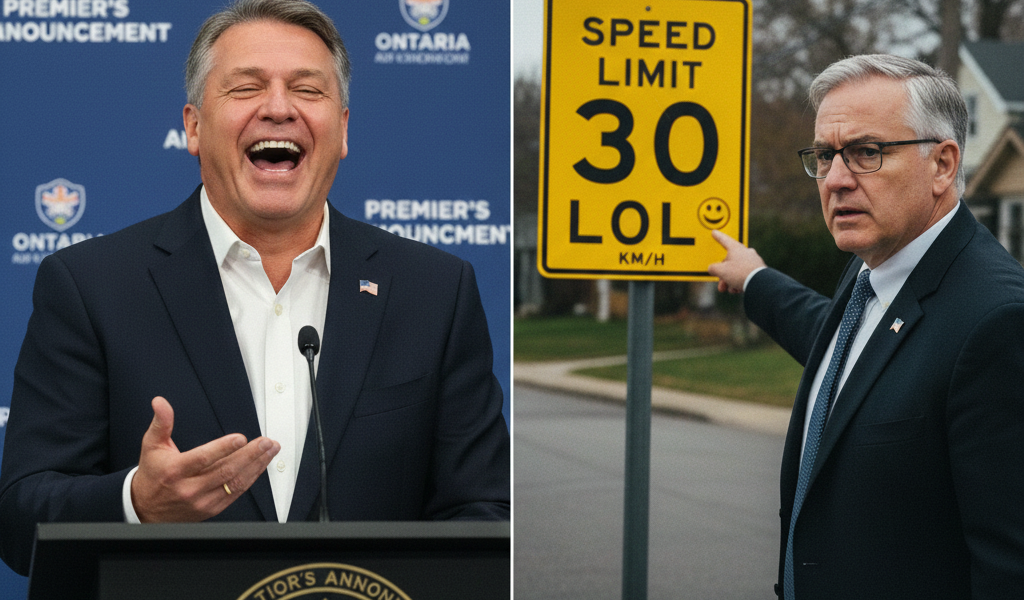
Ontario Premier Doug Ford drew attention and criticism this week after reacting dismissively to concerns raised by several municipalities regarding the province’s new speed signs, intended to replace automated speed cameras. The Premier told reporters he “broke out laughing” when hearing complaints about the size and visibility of the signs, sparking debate over road safety, government communication, and the balance between provincial policy and local priorities.
The comments came amid ongoing efforts by the Ontario government to update speed enforcement strategies and modernize traffic management systems across the province. Municipal leaders have warned that the replacement signs may not adequately address safety concerns, particularly in high-traffic urban areas.
Municipalities Voice Concerns Over Speed Sign Safety
Local officials in multiple Ontario municipalities have expressed worry that the new digital speed signs, designed to replace traditional automated cameras, may not be sufficiently visible to drivers or effective at promoting compliance. Some officials also highlighted potential safety risks for pedestrians and cyclists, particularly in areas with complex intersections or heavy foot traffic.
“While we understand the province’s intent, the size and placement of these signs are a real concern for our community,” said one municipal transportation officer. “We need to ensure that any speed monitoring measure genuinely improves road safety rather than creating confusion or complacency among drivers.”
Concerns have also been raised about the consistency of sign placement across municipalities, with local leaders advocating for standardized guidelines to ensure all road users understand and respect the new system.
Premier Ford’s Dismissive Reaction
During a media briefing, Premier Ford was asked about municipal feedback on the speed signs. In response, he chuckled and said, “I broke out laughing when I heard the complaints,” suggesting that he found the objections exaggerated or misplaced.
Ford’s reaction has drawn mixed reactions from the public and political analysts. Some observers interpret the remark as an off-the-cuff attempt at humor, while others see it as dismissive of legitimate local concerns regarding road safety.
Transportation and urban planning experts have emphasized that effective traffic management requires collaboration between provincial authorities and municipalities. “Local input is crucial,” said a traffic safety analyst. “Premiers or ministers can set policy, but municipalities understand the daily realities on their streets.”
Province Moves to Modernize Speed Enforcement
The speed signs initiative is part of a broader provincial effort to modernize traffic enforcement and reduce reliance on traditional speed cameras. According to the Ministry of Transportation, the new signs are intended to provide real-time feedback to drivers about their speed, encouraging compliance through visibility and electronic alerts rather than automatic fines.
How the New Signs Work
The digital signs display a driver’s current speed alongside the posted limit and may flash warnings when motorists exceed the speed threshold. The system is designed to improve awareness and prevent speeding in school zones, residential areas, and high-traffic corridors. Unlike conventional speed cameras, the new signs do not automatically issue tickets but instead aim to influence behavior through immediate visual feedback.
“The goal is to make drivers more aware of their speed and reduce the likelihood of accidents,” said a Ministry of Transportation spokesperson. “It’s a proactive approach, focused on prevention rather than enforcement alone.”
Safety Experts Call for Careful Implementation
Road safety experts have urged the province to carefully consider municipal feedback before implementing the signs on a large scale. Critics argue that overly small or poorly placed signs could be overlooked by drivers, potentially undermining the intended safety benefits.
“Speed feedback signs can be effective, but they need to be clearly visible and appropriately positioned,” said a professor of civil engineering specializing in transportation. “If drivers cannot easily see or interpret the signs, the system loses credibility and fails to achieve its safety goals.”
Some municipalities have also expressed concern about the lack of consultation prior to the rollout, advocating for pilot programs or phased implementation to ensure the signs are effective in diverse urban and suburban settings.
Political Fallout and Public Debate
Premier Ford’s remarks have reignited a broader political debate about provincial-municipal relations in Ontario. Critics argue that dismissive comments from the Premier could strain collaboration and undermine public trust, particularly on issues involving community safety.
Opposition politicians have called for greater dialogue and transparency, emphasizing the importance of municipal input in decisions affecting local roads and residents. “Road safety is not a laughing matter,” said a member of the provincial opposition. “We need constructive engagement between the province and municipalities to ensure policies work for everyone.”
Public response has been mixed. Some residents have echoed Ford’s sentiment, suggesting that municipalities sometimes overcomplicate relatively straightforward policy changes. Others, particularly parents and commuters in high-traffic areas, have stressed the importance of taking municipal feedback seriously to prevent accidents and injuries.
Balancing Innovation and Safety
The controversy highlights a central challenge for provincial transportation policy: balancing the adoption of innovative technologies with the practical realities of local roads and traffic patterns. Digital speed signs represent a shift toward technology-driven enforcement, but their success depends heavily on proper implementation, public awareness, and community support.
Transportation planners stress that technology alone cannot solve speeding issues. Complementary measures, including driver education, street design improvements, and enforcement strategies, remain critical to achieving meaningful safety outcomes.
Next Steps for Municipalities and the Province
While Premier Ford’s reaction may have sparked headlines, municipal leaders indicate they are still willing to engage in constructive discussions about the signs’ deployment. Several municipalities are requesting detailed guidelines on placement, size, and operation, and are seeking assurances that the signs will not inadvertently create safety hazards.
The Ministry of Transportation has indicated that it is reviewing feedback and will continue working with local authorities to ensure that speed management initiatives meet community needs. Pilot projects may be conducted in select municipalities to test the effectiveness of the new signs before a full province-wide rollout.
Conclusion: A Conversation on Road Safety Continues
The debate over Ontario’s new speed signs underscores the ongoing tension between provincial initiatives and local concerns. While Premier Ford’s reaction has drawn attention, the underlying issues of visibility, effectiveness, and municipal input remain central to the discussion.
As the province moves forward with its speed management strategy, collaboration between Ottawa, Toronto, and local municipalities will be essential to ensure that the new signs achieve their intended goal: safer streets for drivers, pedestrians, and cyclists alike.
The coming weeks are likely to see continued dialogue, potential adjustments to the rollout plan, and scrutiny from both the public and safety advocates. Ultimately, the success of Ontario’s speed sign initiative will depend not on political commentary, but on careful planning, thoughtful implementation, and a shared commitment to protecting road users.
You may also like



Leave a Reply