
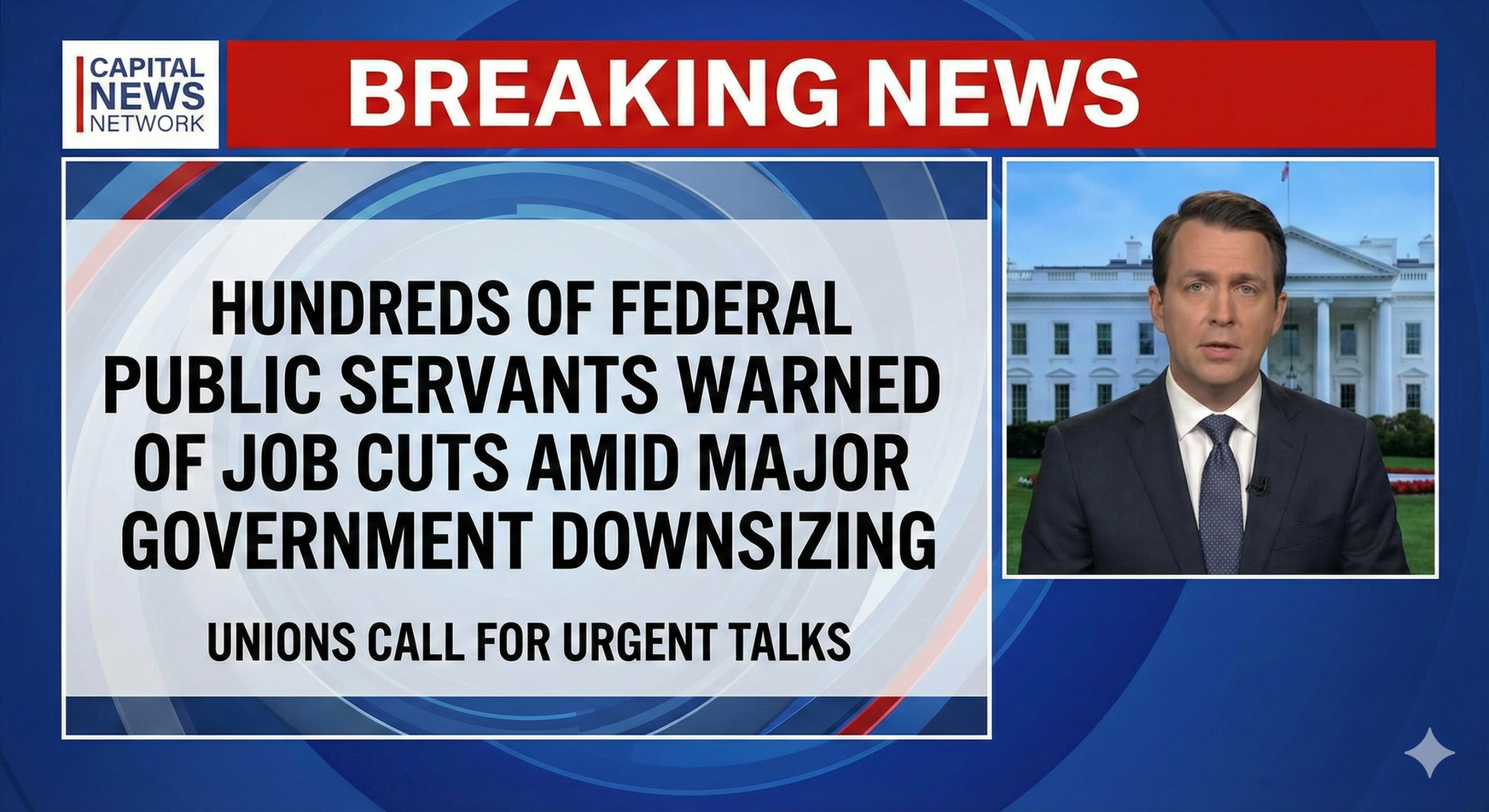
Union alerts staff as federal agencies begin issuing layoff warnings
Hundreds of workers in Canada’s federal public service received notices this week indicating they could soon lose their jobs, as the government begins to implement sweeping cost-cutting and workforce reductions across several departments. According to labour unions, some of the hardest-hit agencies include Natural Resources Canada (NRCan), Public Service Commission of Canada, Crown-Indigenous Relations and Northern Affairs Canada, and Department of Finance Canada. Yahoo Finance+2iNFOnews.ca+2
Unions are sounding the alarm, warning that the reductions threaten both job security for public servants and the quality of essential services Canadians rely on.
Where the notices are being issued — and what the numbers say
Departments receiving the most warnings
-
Natural Resources Canada (NRCan): The Public Service Alliance of Canada (PSAC) reported that it issued layoff-notice letters this week to 219 of its members at NRCan.
-
In addition, another union, Professional Institute of the Public Service of Canada (PIPSC), said roughly 200 of its members at NRCan also received similar layoff warnings.
-
Outside NRCan, other notices were sent to:
-
109 employees at the Public Service Commission;
-
92 staffers at Crown-Indigenous Relations and Northern Affairs Canada;
-
74 employees at the Department of Finance.
-
In total, several hundred public servants across these agencies have received official warnings this week indicating their positions may be eliminated.
The broader context: What the downsizing plan looks like
These individual notices come as part of a comprehensive government initiative to drastically reduce administration costs and shrink the size of the federal workforce. Under the current plan, the government aims to eliminate some 40,000 public service positions from a peak of 368,000 in 2023–24.
Over the past year alone, around 10,000 positions have already been cut.
As part of the broader cost-saving measures, the government plans to cut about 1,000 executive positions over the next two years and reduce consulting and management-service spending by 20% over three years.
Government’s stated approach: attrition, transitions, and early retirement
While some employees received warning letters, the government says this is the start of a process — not an immediate layoff — and that several voluntary mechanisms will be offered first.
Early retirement and voluntary exit: the first option
As part of a broader workforce adjustment plan, nearly 68,000 public servants have been sent information about a proposed early retirement program, which could launch as early as January 2026.
Under this scheme, eligible employees will have a 120-day window to apply. Applicants may be asked to retire within around 300 days of approval.
However, the government emphasizes that not all applicants will necessarily be accepted — and decisions will be subject to operational needs, continuity requirements, and departmental reassignment capacities.
In supporting statements, government officials stressed that workforce reductions would be managed gradually — relying on attrition, reassignments, voluntary departures, and early retirements — to mitigate the impact on employees while meeting long-term efficiency goals
A spokesperson for one department — Employment and Social Development Canada (ESDC) — confirmed staffing adjustments are being planned, but details about numbers and timelines remain unclear.
Union concerns: risks to public services and institutional capacity
Labour unions warn that these cuts — particularly at critical agencies like NRCan — could significantly weaken Canada’s ability to manage and protect natural resources, respond to environmental crises, and maintain essential public services.
According to union leaders, reducing staffing in scientific, regulatory, and oversight roles may lead to delays or lapses in service delivery, weaker environmental oversight, and greater strain on remaining staff who may be required to absorb increased workloads
One union representative argued that when positions responsible for “inspecting food, delivering benefits, protecting data, and tracking wildfires” are eliminated, the result isn’t leaner government — but a more fragile one.
You may also like



Leave a Reply