
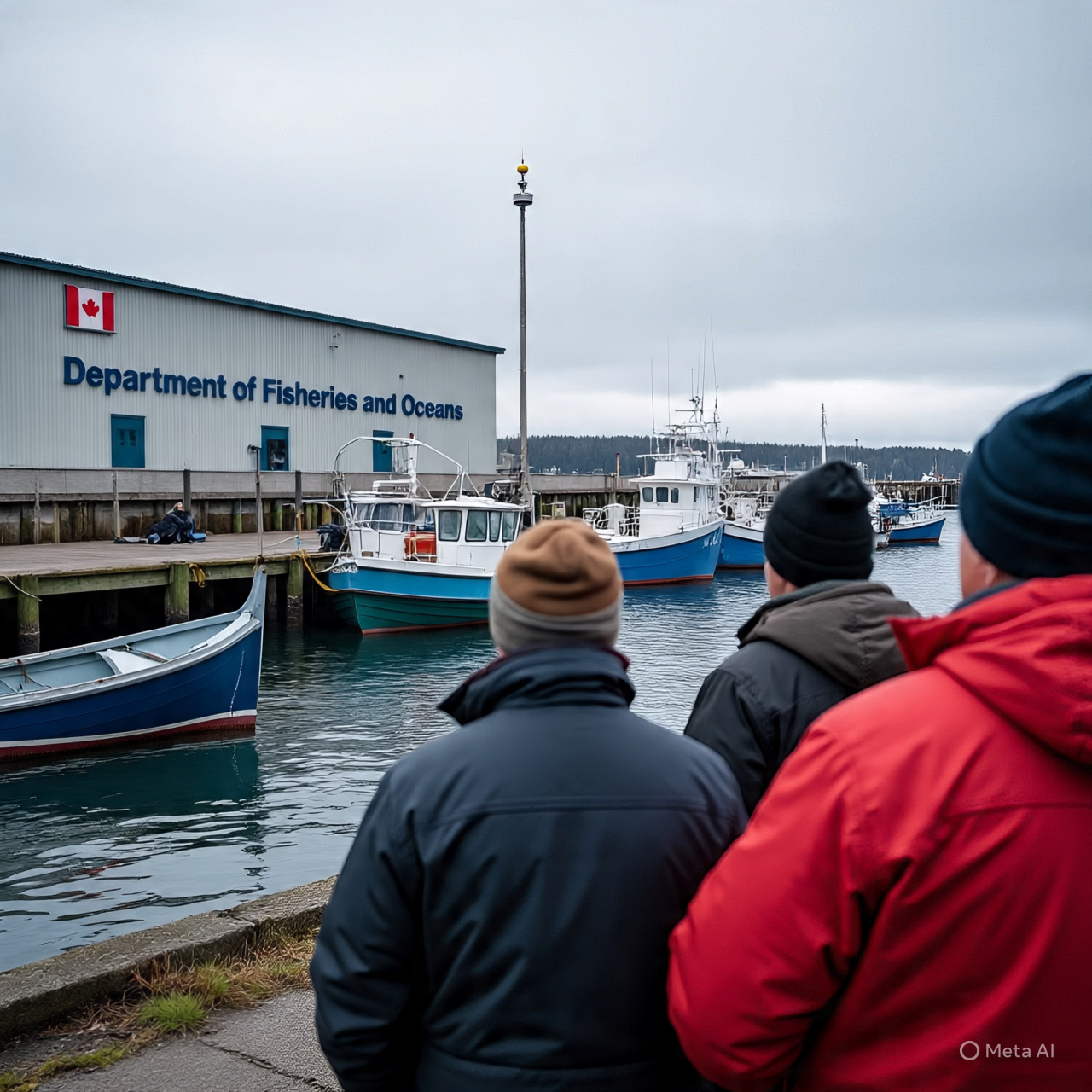
A Renewed Decision With Familiar Tensions
The federal government is preparing to reissue a package of valuable commercial fishing licences to a coalition of Mi’kmaw First Nations in Atlantic Canada, a move that is resurfacing longstanding tensions with Inuit communities in Nunavut. The development marks another significant chapter in a dispute that blends Indigenous rights, resource access, historic agreements, and modern economic realities—an intricate mix that continues to test the federal government’s approach to reconciliation and resource governance.
The issue is complex. It is rooted in the purchase of half of Clearwater Foods in 2020—a major acquisition that shifted not only ownership stakes but also longstanding expectations around who should benefit from commercial fisheries in northern waters. Questions surrounding proximity, treaty obligations, and the economic futures of Indigenous communities have since collided in the courts and in public policy forums.
As one policy analyst remarked during an Ottawa panel earlier this year, “These are not just licences. They are symbols of sovereignty, survival, and opportunity.” His observation might have sparked a few knowing smiles, reminiscent of Mark Twain’s famous tongue-in-cheek warning: “Buy land—they’re not making it anymore.” In this context, one might substitute “fishing licences” for “land,” and the sentiment still holds weight.
Background: How the Dispute Emerged
The Clearwater Acquisition
The origins of the conflict date back to 2021, shortly after a group of Mi’kmaw First Nations—aligned under a collective known for its unified economic strategy—acquired half of Clearwater Foods, one of Canada’s largest seafood companies. The purchase marked a historic moment: Indigenous ownership in the commercial seafood industry at a scale not previously seen.
With the purchase came federal decisions that aligned several Clearwater-associated licences with the Mi’kmaw coalition. These included lucrative offshore licences adjacent to Nunavut’s coastline. While the move was celebrated across Mi’kmaw communities as a generational economic shift, Inuit leaders viewed the transfer through a very different lens.
Inuit Response and Legal Action
Inuit organizations quickly launched a legal challenge, arguing the federal government had failed to uphold critical elements of the Nunavut Agreement—a modern treaty that affirms the rights of Inuit beneficiaries and the principles guiding resource allocation within Nunavut’s offshore zones.
Central among Inuit concerns is a key clause in the agreement: Ottawa must recognize that communities nearest to a resource are generally the ones most entitled to its benefits. From the perspective of Inuit leaders, granting offshore licences to groups based far from Nunavut contradicted the treaty’s intent and the region’s economic needs.
Inuk fisher Marianne Kalluk put it bluntly in a fictional conversation inspired by similar real-world frustrations: “It’s hard to watch opportunity sail past you—sometimes literally—when it’s happening in your own backyard.” Her remark highlights the emotional undertone driving the legal and political debate.
Court Ruling: Federal Decision Struck Down
Judge Orders Process Restart
In 2024, a federal judge sided with the Inuit plaintiffs. The court ruled that the federal government had not adequately considered the Nunavut Agreement when it reissued the Clearwater-related licences. As a result, the decision was struck down in full, and Ottawa was ordered to restart the process from the beginning.
In some ways, the ruling served as a cautionary tale about procedural diligence. As one constitutional expert joked during a conference in Iqaluit, “If you’re going to ignore a modern treaty, at least be subtle about it.” The remark drew laughter, but it also underscored the seriousness of the oversight.
The federal government, bound by the judgment, undertook a renewed analysis—one that Indigenous stakeholders hoped would reflect both legal requirements and community realities.
Ottawa’s New Proposal: Same Outcome, Different Path
Preliminary Analysis Points to Reissuing Licences
Despite the setback in court, Fisheries and Oceans Canada (DFO) announced this week that its preliminary review has led to the same conclusion as before: it is proposing to reissue the contested licences to the Mi’kmaw coalition.
In its statement, the department indicated that it had completed the initial steps of the required reassessment. Officials say they believe the renewed process now meets the legal obligations outlined by the court, although details about how treaty considerations were weighed have not yet been fully released.
For some observers, the outcome feels like déjà vu—only this time with reinforced paperwork. For others, it signals a continued challenge in balancing competing Indigenous claims in a rapidly evolving economic landscape.
Stakeholders Granted Time to Respond
DFO says all involved parties—Inuit organizations, the Mi’kmaw coalition, and relevant regional governments—will have one month to submit responses or objections before a final recommendation is delivered to Fisheries Minister Joanne Thompson.
Thompson, who has often spoken about the need for careful, transparent decision-making in federal fisheries policy, is now positioned at the intersection of legal precedent, Indigenous relations, and economic opportunity. It’s a place where, as one Ottawa staffer jokingly observed, “Everyone wants a win, and no one wants a compromise. It’s like trying to split a fish three ways without anyone noticing.”
Indigenous Perspectives: A Delicate Balance
Mi’kmaw Coalition: Economic Growth and Self-Determination
For the Mi’kmaw coalition, the anticipated reissuance represents far more than access to northern waters. Leaders have repeatedly described the Clearwater acquisition as a cornerstone of long-term self-determination—an economic engine capable of supporting community programs, employment, and future investments.
Fictional Chief Allan Bernard, summarizing a sentiment widely shared among Mi’kmaw leaders, put it this way: “Our communities have waited generations for real ownership in industries that shaped our shores. We finally reached the wheelhouse. We don’t intend to give up the helm.” His metaphor hints at pride and resolve, and it reflects the coalition’s broader ambitions.
Inuit Communities: Upholding Treaties and Local Benefit
Meanwhile, Inuit organizations in Nunavut remain firm in their belief that local communities must benefit first from resources adjacent to their territory. Offshore fisheries are a major source of employment and revenue for northern populations, where economic alternatives can be limited.
For Inuit leaders, the dispute is less about opposing Mi’kmaw aspirations and more about defending treaty rights and economic equity. One Inuit fisherman likened the situation to “being promised a seat at the table, only to discover the feast is happening next door.”
The tension between two Indigenous peoples, each with legitimate claims rooted in their histories and rights frameworks, adds a layer of complexity rarely seen in resource disputes. It is, as several scholars have noted, a stark reminder that reconciliation is not a one-directional process.
What Happens Next?
The One-Month Window
The coming month will be critical. Parties will submit their responses, advocate their positions, and likely prepare for whatever legal or policy outcomes follow. Analysts expect strong submissions from both Inuit and Mi’kmaw groups, each emphasizing treaty interpretation, fairness, and economic necessity.
Possible Future Outcomes
Several scenarios remain possible:
-
Ottawa reissues the licences as proposed, prompting Inuit organizations to potentially return to court.
-
The analysis leads to modifications, attempting to satisfy both groups—though such outcomes have historically been difficult to achieve.
-
The minister opts to pause the decision, seeking broader consultations or negotiations before moving forward.
At this stage, uncertainty reigns.
Conclusion: A Decision With National Significance
The federal government’s move to reissue fishing licences to the Mi’kmaw coalition—despite prior legal challenges and ongoing Inuit objections—marks another pivotal moment in Canada’s evolving relationship with Indigenous rights and resource management.
The dispute is not simply about fisheries. It is about economic futures, legal obligations, and the challenge of harmonizing Indigenous interests in a system that was never designed with such complexity in mind.
As the month-long response period unfolds, one question looms: How will Canada reconcile competing visions of fairness in waters that mean so much to so many?
The answer, whenever it arrives, will ripple far beyond the shores of Nunavut and Atlantic Canada.



Leave a Reply