
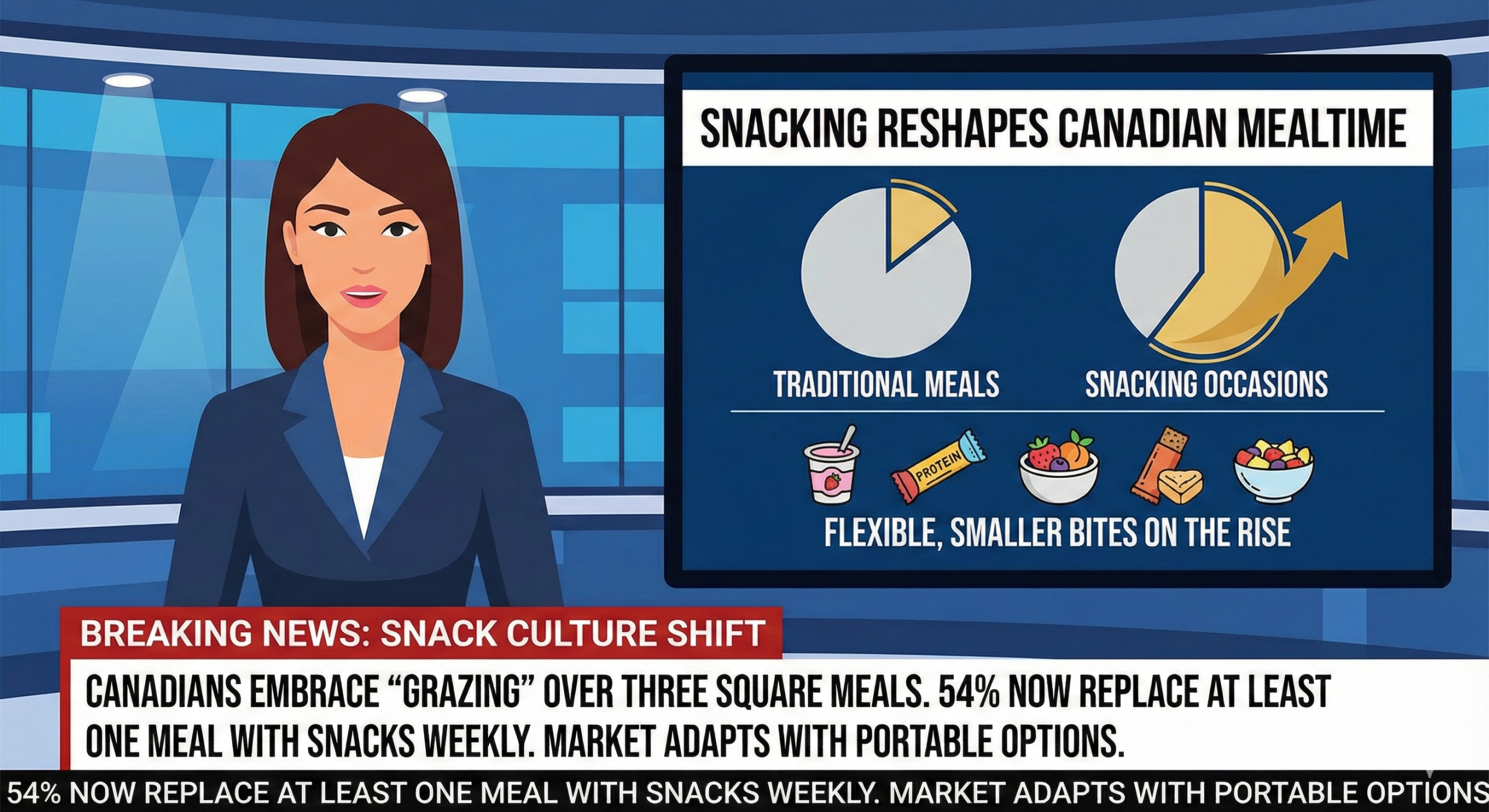
After a demanding day at work, the idea of preparing a full-course dinner and tackling a sink full of dishes can feel overwhelming. For many Canadians, the solution has become increasingly simple: replace the traditional meal with an assortment of ready-to-eat snacks. A plate of cheese, fresh fruit, roasted nuts, popcorn, or jerky, paired with a quiet moment on the couch, now often stands in for what used to be a structured lunch or dinner.
This gradual shift in eating behaviour is transforming how consumers define meals, encouraging food companies to rethink product lines and fueling the rapid rise of what industry experts call “snackification.” Driven by convenience, budget-conscious decisions, and evolving health priorities, snacking is no longer just a casual habit — it is becoming a central feature of modern dining culture.
The Rise of “Snackification” in Everyday Life
The concept of snackification refers to the growing tendency of consumers to assemble several smaller food items to form what effectively becomes a full meal. According to Jo-Ann McArthur, president of Nourish Food Marketing, this trend reflects a fundamental change in how people approach food.
Rather than sitting down to a single, structured dish such as a sandwich or a plated entrée, consumers are increasingly opting for variety. They are choosing small portions of different items that offer both flexibility and personalization, allowing them to tailor their plate to taste, time constraints, and cost considerations.
A Shift Away from Traditional Meals
Research from a 2025 Restaurants Canada report highlights the scale of this change. Approximately 65 percent of Canadians admitted to replacing a traditional meal with a snack at least once a month. The shift is most pronounced among younger generations, including millennials and Gen Z, who demonstrate a higher willingness to redefine what qualifies as a proper meal.
This changing behaviour points to a broader cultural transformation, where rigid meal schedules are being replaced by more spontaneous and informal eating patterns.
Post-Pandemic Lifestyles and Convenience-Driven Choices
A significant factor behind the rise in snacking is the evolution of work routines following the pandemic. Hybrid and remote work models have blurred the boundaries between professional and personal time, influencing when and how people eat.
Sally Lyons Wyatt, global executive vice-president and chief adviser for consumer goods and food service insights at Circana, explained that the modern workday often makes it easier to reach for a quick snack than to prepare a full meal.
Accessibility and Affordability
Whether someone is working from home or commuting to the office, snacking offers a faster and more affordable alternative. Preparing a complete lunch can feel impractical during a busy schedule, while purchasing a full meal outside can quickly strain a budget.
“The accessibility of snacks allows consumers to get whatever they want, whenever they want, for whatever occasion they choose,” Wyatt noted, emphasizing that flexibility and immediacy are now key drivers of consumption.
Redefining What Counts as a Snack
As the trend continues to evolve, so too does the definition of what constitutes a snack. According to Jenny Thompson, vice-president of market strategy and understanding at Ipsos Canada, traditional snack options such as chips, pretzels, and cookies are no longer the sole choices.
Consumers are increasingly redefining snacks to include foods that were once seen as full meals or leftovers.
Non-Traditional Snacking Options
A bowl of cereal, a slice of leftover pizza, or even a protein shake can now be labelled as a snack. This flexibility reflects a more fluid approach to eating, where portion size and timing matter more than strict categorization.
Instead of adhering to three set meals a day, many individuals are spreading smaller portions throughout their schedule, prioritizing convenience and efficiency over formality.
The Growing Demand for Healthier Snack Choices
Alongside the shift toward smaller portions, there has been a pronounced increase in demand for “better-for-you” snack options. These products typically feature fewer calories, reduced sugar, and higher nutritional value, aligning with consumers’ broader wellness goals.
Early insights from an upcoming 2026 Ipsos report suggest that healthy snacks occupy a unique position, offering a balance between indulgence and nutrition. These products allow individuals to satisfy cravings while maintaining a sense of dietary discipline.
Beyond Taste and Convenience
Thompson explained that modern consumers want more than just flavour and convenience from their snacks. They are increasingly looking for clean labels, simple ingredients, and products that meet both emotional and functional needs.
“It doesn’t quite hit the mark if it’s only convenient or tastes good,” she noted. “It also needs to be clean, with simple ingredients, and align with a broader sense of wellness.”
Influence of Weight-Loss Medications on Eating Patterns
Another factor driving the shift toward smaller, snack-based meals is the growing use of weight-loss drugs such as Ozempic. These medications, which reduce appetite and increase feelings of fullness, are changing how people approach food consumption.
McArthur observed that many individuals using these medications naturally gravitate toward smaller portions and high-nutritional-value foods. As a result, their traditional meals have effectively transformed into structured snacking sessions.
Prioritizing Nutrition Over Quantity
Rather than focusing on large portions, these consumers concentrate on nutrient-dense options that provide maximum benefit in smaller servings. This behaviour reinforces the broader trend of snackification while further accelerating demand for healthier food options.
How Food Manufacturers Are Adapting
As consumer habits evolve, food manufacturers are adjusting their strategies to remain relevant in a fast-changing market. Many traditional companies are diversifying their product lines, introducing innovative snack options designed to appeal to health-conscious and time-strapped buyers.
Maple Leaf Foods Inc., for example, has launched on-the-go meat products such as Mighty Protein, aiming to capture the growing demand for portable, protein-rich snacks.
Challenges for Established Brands
Not all companies have transitioned seamlessly. Campbell’s Co., which owns popular snack brands including Goldfish crackers and Cape Cod chips, recently reported a slowdown in its snacks category as consumers shifted toward healthier alternatives.
Chief executive Mick J. Beekhuizen acknowledged that snacking behaviours are changing and emphasized the company’s efforts to introduce new flavours and cleaner ingredient profiles to attract wellness-focused buyers.
The Role of Major Corporations in the Wellness Snack Movement
Some of the world’s largest food companies have been quicker to respond. PepsiCo Inc., owner of Frito-Lay, has emerged as a leader in the wellness snack space by both acquiring smaller health-focused brands and reformulating its flagship products, including Doritos and Cheetos, to offer healthier versions.
In addition, companies are increasingly offering multi-packs with smaller, single-serve portions, catering to consumers who prioritize portion control and variety.
Portion Size and Variety Over Shrinkflation
Wyatt clarified that the trend toward smaller snack packaging is not driven by shrinkflation but by consumer preference. Buyers are actively seeking bite-sized options that allow them to experiment with different flavours without committing to large quantities.
Industry Growth and Long-Term Outlook
Data from Statistics Canada indicates that the resurgence of on-the-go snacking in the post-pandemic era has encouraged manufacturers to reduce portion sizes and innovate packaging. The agency projects that the snack industry will grow by 6.4 percent between 2023 and 2028, reflecting strong and sustained demand.
A Trend That Is Here to Stay
“Snacking is never going to go away,” Wyatt said, pointing to the diversity, flexibility, and choice that attract modern consumers. The ability to customize eating habits according to lifestyle, mood, and schedule has cemented snacking as a permanent fixture in contemporary food culture.
Conclusion: A New Definition of Mealtime in Modern Canada
The growing preference for snacks over traditional meals marks a significant transformation in how Canadians approach food. From busy professionals seeking convenience to health-conscious individuals prioritizing nutrition and portion control, the shift is driven by a complex blend of lifestyle changes, economic considerations, and wellness trends.
As food manufacturers adapt their offerings and consumers continue to redefine what a meal looks like, snackification is reshaping the culinary landscape. What was once seen as a quick bite between meals has now become a primary way of eating — a reflection of an evolving society that values flexibility, variety, and efficiency above convention.
With industry growth forecasts remaining strong and consumer demand continuing to rise, it is clear that the bite-sized revolution is not a passing phase, but a lasting evolution in modern eating habits.
You may also like



Leave a Reply