
Introduction: A Concerning Trend Beneath Improving National Numbers
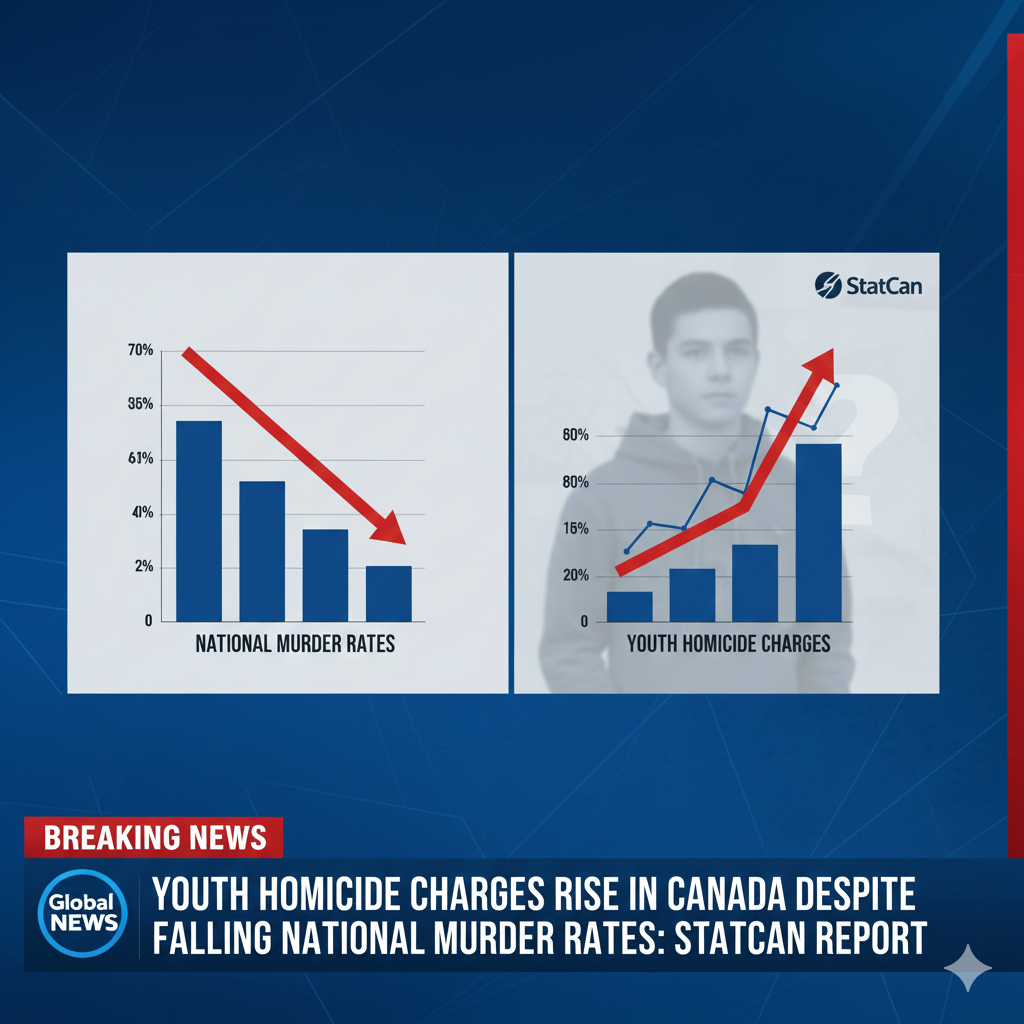
Canada’s overall murder rate may be moving in the right direction, but new data from Statistics Canada reveals a troubling and contrasting pattern among young people. A 2024 report released by StatCan shows that while the country recorded a general decline in homicide incidents, the number of youth facing homicide-related charges has continued to rise.
The findings highlight a complex and unsettling reality for law enforcement, policymakers, educators, and families across the country. On one hand, national efforts aimed at reducing violent crime may be showing early signs of success. On the other, the growing presence of young people in the most serious category of violent offences raises urgent questions about the underlying causes, the effectiveness of prevention programs, and the social environments in which Canadian youth are coming of age.
This emerging divide between overall crime trends and youth-related violence underscores the need for a deeper, more targeted response.
Understanding the StatCan Findings
Statistics Canada’s newest analysis draws attention to the number of young people charged in connection with homicide cases. These charges include offences such as first-degree murder, second-degree murder, and manslaughter. Although youth homicide charges remain a relatively small portion of total violent crime in Canada, the upward trend is significant enough to warrant national concern.
In contrast to this increase among youth, adult homicide rates have not shown the same pattern. In fact, Canada’s overall murder rate decreased in 2024 compared with previous years, suggesting that violent crime trends among adults and young people may be moving in opposite directions.
This divergence is particularly alarming, as it hints at deeper systemic or societal issues affecting young Canadians that are not being adequately addressed by conventional crime-reduction strategies.
What Is Driving the Increase in Youth Homicide Charges?
H3: Possible Links to Socioeconomic Conditions
Experts often point to socioeconomic pressures as a key factor in rising youth violence. Financial insecurity, lack of access to education and employment opportunities, and unstable housing conditions can increase the likelihood of youth turning toward violent behaviour, gangs, or illegal activity.
In communities where young people feel excluded from legitimate paths to success, crime can sometimes appear as an alternative means of survival, status, or belonging. This sense of marginalization can contribute to destructive decision-making and expose youth to dangerous environments where violence becomes more common.
H3: Influence of Gangs and Organized Crime
Gang involvement is another factor frequently associated with rising youth homicide charges. Young people are often recruited by organized criminal groups because they are more impressionable and, in some cases, face fewer legal consequences compared with adults.
These groups may lure youth with promises of money, protection, and belonging. Once involved, however, young individuals can quickly find themselves entangled in violent conflicts, including territorial disputes and retaliatory attacks, leading to deadly outcomes.
Law enforcement agencies across Canada have repeatedly warned about the increasing sophistication of gangs in targeting youth, especially in urban areas.
H3: Impact of Mental Health and Trauma
Mental health struggles among youth, especially when combined with unaddressed trauma, can also play a critical role. Exposure to domestic violence, abuse, substance use in the home, or community instability can leave deep psychological scars that manifest as aggression, emotional numbness, or impulsive behaviour.
In many cases, youth involved in serious crimes are themselves victims of long-term neglect or violence. Without adequate access to mental health services and early intervention, these issues can spiral into irreversible consequences.
The Role of the Justice System in Youth Crime
Canada’s youth justice system is designed to balance accountability with rehabilitation. Under the Youth Criminal Justice Act (YCJA), the focus is placed on reintegrating young offenders into society while still holding them responsible for their actions.
However, the rise in youth homicide charges has reignited debate about whether the current system is effectively preventing repeat offences and addressing root causes of extreme violence.
Critics argue that the justice system often intervenes too late, when risks have already escalated. By the time a young person is charged in a homicide case, opportunities for prevention through counselling, mentorship, and community support may have already passed.
Supporters of the current framework, on the other hand, emphasize that harsher punishments for youth may not solve the problem and could instead create lifelong barriers that increase the risk of reoffending.
Community Impact: Fear, Grief, and Reflection
Each homicide, regardless of the age of the accused, leaves a devastating mark on families and neighborhoods. When the suspect or the victim is a young person, the emotional impact often feels even more profound.
Communities affected by youth-involved violence frequently experience increased fear, loss of trust, and a sense of cultural or social breakdown. Schools, families, and local organizations are forced to confront the reality that the next generation is facing challenges that go far beyond ordinary teenage struggles.
In many cases, educators and community leaders have called for more investment in youth programs that promote resilience, conflict resolution, and positive mentorship. They argue that meaningful engagement and a sense of purpose are among the strongest tools for preventing violence.
Prevention Efforts: What Can Be Done?
H3: Strengthening Youth Support Programs
One of the most widely supported solutions is an expansion of after-school programs, sports teams, job training initiatives, and mental health support services. These programs provide structured environments where young people can build skills, form positive relationships, and develop a sense of belonging and achievement.
Early intervention has proven to be especially effective. When warning signs such as aggressive behavior, truancy, or emotional distress are identified early, social workers and educators have greater opportunities to redirect a young person’s path.
H3: Community Policing and Outreach
Improved relationships between law enforcement and youth can also help reduce violence. Community policing strategies that prioritize mentorship, communication, and trust-building—rather than purely punishment—have shown promise in certain areas.
By fostering mutual respect and open dialogue, police officers can become role models and early interveners rather than just enforcers of the law.
H3: Family and School Engagement
Strong family support and stable school environments are essential foundations in preventing violent outcomes. Parenting programs, family counselling, and school-based mental health services can play significant roles in keeping youth on a positive track.
Schools, in particular, are often the first places where emotional and behavioral concerns become visible. Training staff to recognize these signs and respond appropriately can potentially prevent future escalation.
A Call for Data-Driven Policy Change
The rise in youth homicide charges presents a powerful call to action for governments at all levels. Policymakers rely on reports from agencies like Statistics Canada to guide legislative priorities, funding decisions, and community initiatives.
This latest data points to an urgent need for youth-centered reforms that go beyond traditional law enforcement. Investments in housing stability, mental health support, education, and safe recreational spaces could be pivotal in reversing the trend.
Addressing youth violence requires more than reacting to crime—it demands proactive strategies that tackle the conditions which make violence possible.
Conclusion: A Crossroads for Canada’s Youth
While the decline in overall murder rates provides a reason for cautious optimism, the rising number of youth charged with homicide serves as a stark reminder that not all progress is shared equally across age groups.
Canada now faces a critical crossroads: continue to focus solely on broad crime statistics, or dig deeper into the specific experiences of its most vulnerable young people. The data points clearly to the need for targeted intervention, early support, and sustained community investment.
If acted upon effectively, this moment could become a turning point—one where troubling statistics lead not only to awareness, but to transformation. The future of Canadian communities may well depend on how seriously this warning is taken and how boldly the nation chooses to respond.



Leave a Reply